
Today was our last day with Thomas, we started a little late this
morning, we all needed a morning to relax and sleep in a bit. Before leaving we walked across the street from
the hotel to the Butcher shop where the owner of the hotel was, he gave us an
impromptu tour of his shop. I did not
get his name, but I have never seen someone so excited about his job. He took us right back to where they were
making the sausage and showed us how they smoke the meat and gave us many
samples of fresh sausage. He has a very
good reputation, easy to understand from the samples, and does a very good
business. Even though he is the owner
and manager of the hotel, restaurant and butcher shop, he still cuts the meat
everyday, and loved to share it with friends.

About 10:30 we continued our journey through the Black Forest, the weather
was still overcast, but not as bad as the day before so we could see the forest
better, we stopped a couple of time for Robert to take pictures
along the way. We traveled to Freiberg to
catch the train, but not before walking around the town and visiting a 900 year
old catholic cathedral. In this are they
have a farmers market each day with many venders setting up shop to sale their
produce and hand crafted goods. I
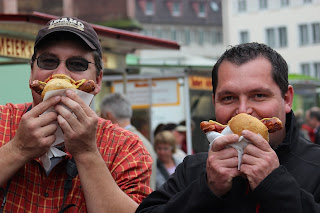
counted at least 12 sausage vendors, and all were busy. We each had bratwurst on a bun for lunch,
the bratwursts were much larger than the buns.
We walked around for nearly an hour looking at the cathedral and seeing
the different vendors at the market. Of
all the thinks for sale I believe the sausage was the most popular, everyone
getting a sausage for lunch. The German
people seem to have a different taste preference than I do. The sausage is good, in moderation, but it is
often eaten by its self with little to go with it, no chips or French fries,
and very hard to find something sweet for desert.


We also visited with Anna, the PR director at the DBLH at their
office. It is always interesting to
visit with then about Ag issues, they seem to be very similar to the ones we
have. The disconnect between the consumer
and the farmers, and how can we influence public opinion of farmers. They don't seem to have any more answers than
we do, but in some ways I believe they are fighting a tougher fight with public
opinion of bio-tech and environmental issues.
We should try to learn from their mistakes on these issues. Paul keeps bringing up an important point in
the discussion which is often overlooked, He asked what is our goal in regards
to public policy and public perception in regards to Ag? Often the policy actually has the opposite effect
in regards to our desired outcome, and we must ask ourselves, do we really want
what we say we want? He advocates for essentially
two systems, one that mass produces food, and one that produces food in a
manner consistent with consumer preferences to feel the niche markets. I believe to some extent this is happening, maybe more so in Germany that in America. The
German people seem to have a strong preference for local food, and I think
greater access to it than do Americans. What
I think most Germans don't understand is that most of their meat and dairy,
although produced locally is dependent on animal feed, Soy, largely from South
America and some from the USA. They
simply don't have the land to produce enough feed for their livestock, especially when they use such a large amount of land to feed the bio-gas
plants. However the public seldom wants
to be confused with factual details.
Another concern that they have for the future of agriculture in Germany
and all of Europe is the lack of young people getting involved with Ag. Just 6% of German farmers are under 35 years
old, and only about 30% of German farmers know who will continue their farms in
the future. The problem is even greater
in other European countries. They
understand the importance of farming, but few young people are choosing to come
back to the farms. The discussion is
being had about giving government incentives for young farmers, but will that
help the situation or hurt? One of those philosophical discussions that no one seems to agree upon, I think history
would show that these types of programs often give short term relief while
increasing the problem in the long term.
We hopped on the train for Saarbruecken, arriving at 7:00 to begin the
next stage of our trip. We were met by
Peter Hoffman and his two cute little girls (8 & 4). Peter also participated in the McCloy
Fellowship last year; he has a diverse farm which we will get to see
tomorrow. He has a 90 cow dairy farm,
120 hectares of crop ground, a small orchard and a small distillery. I am looking forward to visiting his place tomorrow and getting to know his family.
He says that he does not speak good English but I thought he did just fine;
it is the 4th language that he knows. We
arrived at the hotel after 8:00, had dinner, and then off to bed. The hotel has WiFi, but my room is at the very
end of the hall and it doesn't reach down that far, so I am in the lobby
getting everything updated before heading to bed.


